Friday, May 30, 2008

The Logic of the Suicide Bomber


War Nerd Gary Brecher, over at The Exile, has written an excellent article about criticisms of suicide bombers. He basically argues that people think Muslims are crazy for being suicide bombers only because we cannot imagine dieing for some poor neighborhood in Gaza City or Basra. But Europeans have no problem dieing for a cause.
"Normal military service in a 19th-century army at war was pretty close to wearing a suicide vest anyway. Fredericksburg, if you were a Federal; Pickett's Charge, if you were a Reb; those were pretty much suicide missions. And the death you could expect was a million times scarier than the one a modern suicide bomber gets. An Iraqi "martyr" can count on instant, painless death. They usually find the bomber's head totally popped off the body--that's how they ID the bomber. So it's basically death by beheading, and it's worth remembering that beheading used to be a privilege in Europe, the honorable death they reserved for VIPs."
I was just cued into Gary Brecher by Demid recently, and I must say that I am impressed. The guy looks like Dwight Shrute, but he argues like a cross between Steven Levitt and Tyler Durden. Good Stuff.

Thursday, May 29, 2008

Scared to Death in Pakistan

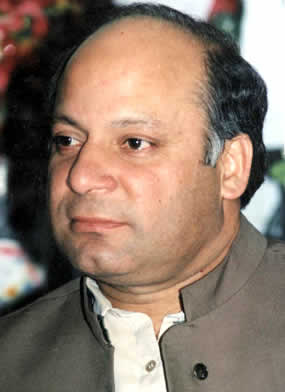
I happened upon This Crazy Report in GQ this afternoon. Its really long and reads more like a travel diary than a piece of journalism, but it does give some great insights into whats been going on in Pakistan since the death of Benazir Bhutto. My favorite part of the article comes when the author is interviewing Nawaz Sharif. Sharif is the head of the Pakistan Muslim League, the second largest political party in Pakistan. He is also an ex-Prime Minister who was deposed by Musharraf's coup.

"Nawaz has made the restoration of the judiciary his first principle. He says this without my asking, because he knows it’ll play well with me, the American democracy freak convinced that the one way for the world to succeed is for everyone to look like us. “Our first priority is to reinstate the judges. To restore the judiciary to the status of November. And to abandon the role of military in politics. These are our primary objectives.”

"He does not mention that he himself had the Supreme Court stormed by military forces when he was in power. I ask him what he’ll do about the militancy. And he turns the question around, like every question, to make it about Musharraf. “These problems have always cropped up whenever there is a dictatorship in this country. They never posed any problems under democracy. These are the so-called fruits of dictatorship that we are seeing at this time.” The one plank of his political platform is “Go, Musharraf, go.” Because Musharraf is of course the root cause of every problem. It’s normal politics, but played at an extraordinary frequency."

"I think to myself: If Musharraf is gone, and things are still bad, what will they do then?"

A common theme in the article is that everyone in Pakistan uses Musharraf to excuse all the country's ills, as though his removal will magically improve the economy and introduce stability and safety.

The only person in the interview who deviates from this point of view is Humayun Gauhar, a Musharraf hanger-on. Gauhar treats Musharraf's political rivals as a bunch of corrupt phonys whose ascension would lead to even more instability than the General has presided over. Gauhar comes off as a stereotypically corrupt bureaucrat treating every broken rule, greased palm, jailed dissident and assassinated rival as business-as-usual. Shockingly, he advocates America deposing President Hamid Karzai in Afghanistan and reinstalling Mullah Omar and the Taliban. This man has had the ear of Pervez Musharraf for years, and even ghost-wrote his autobiography.

Nothing in the article is particularly encouraging. Scratch that. Everything in the article is downright scary. Remember, these guys have nukes. I cannot believe that we are worried about Iran at this point.

Assassinating Terrorist Leadership

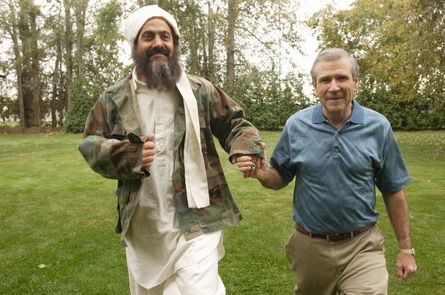
Reach Out and Touch Someone...

StrategyPage.com has put up this article describing the military's strategy of political assassination to defeat Al-Qaeda. The idea is that if the military or the CIA manages to take out Bin Ladin or Zawahiri, then Al-Qaeda will fall apart.

This strategy does not seem to make much sense to me for two reasons. First of all, the decapitation strategy has not been very successful for the Israelis in regards to Hamas, which is a much more structured organization than Al-Qaeda.

But perhaps a better reason to keep Bin Ladin & Co breathing is that they have thus far not proved to be very effective leaders. There is Increasing Evidence that Al Qaeda is losing the ideological war within the Islamic world. Whose to say that Al Qaeda would not just splinter into multiple radical groups if central leadership was removed? Bin Ladin was always more of a financier than a manager, and since 9/11 his assets have been largely frozen. Perhaps he would be more dangerous as a martyr than he is as a fugitive.

Look, I don't want to seem like I wouldn't be happy to see Bin Ladin's head sitting on a pike on the White House lawn. It would totally make my day. But people seem stuck with this idea that our campaign against Al Qaeda is all about revenge, rather than victory. We don't win in Afghanistan by killing Al Qaeda, we win by leaving a stable government to prevent the next Al Qaeda. I am just not sure if the military, or the American people in general, have really thought through what that involves.

Monday, May 26, 2008

Pharma-Future

So I was watching TV last evening and I saw this commercial for some Midol alternative. It was clearly a Midol alternative, because the commercial described all the symptoms which, I've heard, Midol is suppose to cure. The odd thing was that it kept on comparing itself to every pail reliever other than Midol. Struck me as odd.

Anyhoo, the commercial got me thinking about pharmaceutical companies. Critics of socialized medicine, and defenders of pharmaceutical companies in general, often defend high drug prices as being necessary to stimulate innovation. If GlaxoSmithKline or Pfizer do not stand the chance of reaping great rewards, why should they funnel millions of dollars into research?
But how much of that money is being sent towards research for diseases, as opposed to the next Viagra? Why should these corporations look for cures for chronic illnesses when a suppressant is so much more profitable? As Mr. Rock once said, the money is in the medicine, not the cure.

That is not to say that the medicine is not a worthy goal. But I am beginning to worry that PharmaCo's incentives are skewed to towards curing less urgent afflictions. Like having babies or feeling anxious or staying awake. I feel like every time I turn on the TV I see that birth control commercial with the desecrated girly Twisted Sister song. Maybe I'm watching the wrong shows.
What I am wondering is what percentage of new medicines that are patented each year are for life threatening illnesses, as opposed to chronic conditions or less necessary pills. Better question, what percentages of their profits come from medicines for life threatening illnesses?

The Economist just had an article about the growing popularity of "cognitive enhancers", which typically would fall under the purview of non-necessary pharmaceuticals and are even more commonly used than the article implies. America's university system practically runs on Adderall already, especially Ivy League and other very competitive schools. I suspect that study drug use will soon become commonplace among the general population.

Would any of this change due to universal health care that covered prescriptions? It seems like the trend already is for PharmaCos to focus development efforts on drugs that may not even be covered by insurance. So how much could universal health care really change their research patterns?

I really do not know too much about health care in general, so I could be missing something really big here. Im just kinda thinking in text.

Friday, May 23, 2008

The Sistani Fatwa

There are rumors that Grand Ayatollah Sistani, the most influential cleric in Iraq is considering a fatwa directed against the United States. Some have said that Sistani has already issued an edict authorizing attacks on coalition forces in Iraq. Given his history of supporting law and order in Iraq, this seems unlikely. What seems more likely is that he will announce, in some form, that it is time for America to leave. The results of such a fatwa would be tremendous, to say the least. It could completely reverse the recent spate of positive developments, and could make America's current position untenable.

Juan Cole offered some interesting possibilities as to why al-Sistani would do such a thing on his blog,such as to stop a potential assault on Iran using Iraq as a base of operations, to regain influence amongst poor Shiites, or because he genuinely believes that Prime Minister Maliki can control the country without foreign assistance. Between the above reasons, the first and second are most likely. Sistani recently has come out in support of Muqtada Sadr’s demand that any treaty for permanent US bases be subject to a referendum, and is vehemently opposed to any such deal.

If Sistani begins openly opposing Coalition forces in Iraq, America could find its options severely limited. Sistani will not meet with any American official, thus ruling out a negotiated settlement. He could claim the allegiance of Iraq's 17 million Shiites, and the Iraqi government would be hard-pressed to oppose him. Worse, such an edict may cause the "Awakened" Sunni's to give up on being reconciled into the government. Opposition by Sistani would stymie any American efforts to maintain order in all but the Kurdish north. Unless America is prepared to reconquer Iraq and begin using more extreme counterinsurgency tactics like British-style concentration camps, there would be only one remaining option. America would have to leave Iraq.


Of course, this in it self may not be such a disastrous outcome. One can easily imagine the following scenario; Sistani declares that American forces must leave Iraq, and likely Maliki stays mum on the subject. At that point, why can't the US declare victory and go home? Hold a press conference saying that the Iraqi government has proved that it can handle itself, and declare that the US will begin moving divisions out of Iraq by the end of the year.

Sistani's hypothetical fatwa would turn Iraqi opinion decisively against the US occupation. In such a case, President Bush should heed the popular will. Even at the risk of further violence erupting, it is not worth America formally becoming an occupying power. It has been said that democracy is the theory that the common people know what they want, and deserve to get it good and hard. I wonder if Sistani really knows what he wants.

Tuesday, May 20, 2008

Hatred in Sports

Ok, so lemme get this off my chest first. I hate the Spurs. So Much.

I hate the Flopping, I hate the Hack-a-Shaq, I hate the dirty fouls.
But most of all, I hate that they Win.

Duncan Face


Unfortunately I also realize that the Spurs may be a significant reason I follow Basketball.

Elaboration; I am a loyal fan of the New York Knicks. The Knicks reached the NBA finals in 1999, then quickly began a precipitous decent into the basement of the NBA. The cause of this fall from grace was not age or injury, though those certainly contributed, but instead gross mismanagement. During the tenure of Scott Layden and Isaiah Thomas, I was forced to take up the cause of surrogate teams, such as the Kings and the Suns.


I am not a very successful bandwagon-hopper however. Both of the above teams were very successful in the regular season, and were thumped by the eventual champions from LA or San Antonio. after a couple of years, even the most devoted fan becomes fatalistic about his team's post-season chances. So when New Orleans won the first couple games in their series, I almost knew how it was going to end. I kept flipping away from Game 7 like I was avoiding the painful scenes in a Ricky Gervais sitcom.

That said, so long as someone has a chance to beat the Spurs I will watch the playoffs. Without the ability to root for a team, I am content to root against one. I wonder if RedSox fans use to watch Yankees games the same way, back before the Sox curse was lifted and Massholes started to outnumber home crowds in baseball stadiums across the country.


Long story short, all one needs to care about an athletic contest is a reason to care about the result. whether that reason is loyalty, hatred, or a bookie that has an appointment with your kneecaps if the Saints don't cover the spread. Any excuse to care is a great reason to watch.

Friday, May 16, 2008

The Hornets Get a Taste of Some Ol' fashion Texas Home Cookin'

I hate the Spurs so much right now.

Defying the basic principles of Newtonian Physics, every slightest ounce of contact between a Hornet and a Spur led to said Spur flying through the air as though he had been dropkicked by Andre the Giant. In the span of a minute, Paul and West accumulated three offensive fouls courtesy of Duncan and Bowen flailing through the air. Add on a technical and a frustration foul, and the Spurs were up by 20. Thank you, Dick Bavetta!


And then there was the Cheap Shot.
You see that gentleman on the right, sprawled out in pain? Yeah, that is David West, after being body checked in the spine by Rob "I Murder Children" Horry. West had been combating back spasms all series, a fact that Big Shot Bob used to his advantage. Thats just Spurs Championship Basketball. Just ask Steve Nash.

As much as I hate them, I honestly cannot blame the Spurs too much. This is all the fault of David Stern, for his unwillingness to crack down on flopping. After the ugly rough-n-tumble basketball of the 90's, Stern changed the rules to limit the amount of contact allowed on defense, in order to increase scoring. The effect of this is that the best way to defend someone on the perimeter is to wait for any amount of contact, then make like the Italian National Soccer Team. But really, why is this good for the sport? Who wants to watch this crap?

Thursday, May 15, 2008

What Happens in Vegas... sucks.

Just a Heads up.

I should have known what was coming. For those of you who do not know, What Happens in Vegas is a romantic comedy starring Cameron Diaz and Ashton “You Got Got!” Kutcher. The plot is, Diaz and Kutcher meet and get drunk in Vegas, and end up getting married. Kutcher ends up winning a $3 Million payout from the slots, and Diaz stays married with him in order to get a piece of the cash. Hyjinx ensue.

Now, here’s the thing. Logically, there is no good reason to see this film. On paper, it had all the necessary ingredients for a crap buffet. No-longer-young actress who peaked in a mid-90’s Jim Carrey Vehicle? Check. Guy whose chief claim to fame is an obnoxious MTV show? Check. Rob Cordry? Check. (By the way, when did Rob Cordry turn into a poor man’s David Koechner?) )

So, How has leaving the show worked out for ya Rob?

But for some reason, I wanted to believe. The trailers were legitimately funny. I was deceived. The trailer wizards managed to inject comedic timing into the trailers that was sorely lacking in the film. The movie was chock full of unnecessary exposition and painfully delivered lines by Diaz, who spoke like one of those kids selling candy on the subway. Worse, they kept on referring back to be Vegas theme, with lines like "You bet on me. And you made me bet on myself."


"HellomymnameisCameronandIamsellingthesechocolatestogetsomemoneytokeepmeoffthestreets"


The movie was genuinely terrible. I left the theater feeling like I had been mugged. And worse, I cannot blame anybody but myself for going.

PS, How sad is it for your career when your getting burnt by Pauly Shore? YOU GOT GOT! YOU GOT GOT! YOU GOT GOT!

Gotta Love the Military-Industrial Complex

"Only an alert and knowledgeable citizenry can compel the proper meshing of the huge industrial and military machinery of defense with our peaceful methods and goals so that security and liberty may prosper together."


Eisenhower was one smart cookie.

Check out this article about upcoming spending projects for the Pentagon. Note how much the Navy is getting.

I mean, do we REALLY need another aircraft carrier? The US Navy has more Supercarriers than every other nation combined. As a matter of fact, we are the ONLY navy to have ANY supercarriers. We have 7, not including this new one. The British and French are planning to build 1 a piece. I think the Russians were gona build one, but then the Cold War ended and they gave up.
And Destroyers!?!?! $3.2 Bn on Destroyers? Didn't those go obsolete in WW2?

This is why the US government is so deeply in debt? I mean, is this really worth it? Why are we still preping for a brawl with the Soviets? Am I missing something?

Shoutout to the Democracy In America Blog over at the Economist for the Heads Up

Wednesday, May 14, 2008

I mean... Really?!?!?

Aid at the Point of a Gun

Robert Kaplan argues that the United States should militaraly force aid on Myanmar.

The magic of this is that an enormous amount of assistance can be provided while maintaining a small footprint on shore, greatly reducing the chances of a clash with the Burmese armed forces while nevertheless dealing a hard political blow to the junta.


Ok, let’s take a step back here. We are talking about a regime that is so xenophobic that it doesn't want to allow humanitarian workers on its soil. Why would they put up with foreign troops carving out any sized beachhead? Even if you dismiss the military capabilities of the Myanmar Junta, this still implies making a potentially long term commitment of American military resources. Aren’t we already a bit overstretched as it is?

Mr. Kaplan then goes on to argue that just the threat of American military intervention would motivate India, China and Thailand to put pressure on Myanmar on their own. That seems unlikely to me. China is preoccupied with the Olympics, Tibet, and, oh yeah, the MASSIVE EARTHQUAKE they just had. The Indian government is having trouble getting the US-Indian Nuclear cooperation treaty ratified and cannot appear to be kowtowing to America on other issues. And for some reason I just cannot see Thailand doing anything to piss off their neighbors. I don’t see their incentive.

Kaplan spends the remainder of the column worrying about the aftermath of the intervention, when the Junta will inevitably fall. He seems to treat whether or not to intervine as if it were a very difficult issue. It is not. This is a gimme.

Food For Thought: Iraq

Two articles that should be read if you want a decent picture of what’s going on in Iraq recently:

This Three Page Article from the New York Times,
And This Short Interview with Ret. Major Will McCallister

The New York Times article is about the Iraqi army's recent successes in Basra. Roughly a month and a half ago, Iraqi PM Maliki declared that all Sadrist forces in Iraq had to disarm. He then ordered the Iraqi army into Basra (a Sadrist stronghold) to enforce his decree.

The assault looked like a bad idea from the start. al-Sadr had actually been pretty quiet for a while, holding his militias to a ceasefire with Iraqi and Allied forces. Many thought that al-Sadr was willing to seek a role in Iraqi governance by democratic means, and unnecessarily provoking him would only decrease the legitimacy of the upcoming elections.

Initial reports were not promising. Significant segments of the Iraqi army refused to fight. The Mahdi army (al-Sadr’s militias) was well entrenched with a friendly population supporting them. Even with American and British assistance, it looked like Maliki was cruzin’ for a bruisin’.

Or so it seemed. Maliki fired any officer in his army who refused to fight in Basra, and pressed on. Eventually, the two sides worked out a new ceasefire in the city. Iraqi and British forces cracked down hard on any segments of the Mahdi Army that Violate the ceasefire, but have otherwise managed to create relative stability within the city.

Will McCallister argues that the ceasefire is holding because al-Sadr is allowing the Iraqi Army to clean house for him. The idea is that any parts of the Mahdi Army that do not acknowledge al-Sadr’s ceasefire are a political liability in the future, so it is better to have them killed/dismantled. Meanwhile al-Sadr keeps his hands clean and avoids creating additional division within his own ranks through a power struggle.

So then, who won? All in all it appears that the Battle for Basra yielded positive results. However, one has to ask if al-Sadr’s powerbase was significantly damaged by the fighting? It certainly appears that Maliki has become stronger, but is that a good thing? Maliki, mind you, has far deeper ties to Iran than even al-Sadr does.

More importantly, where does this leave the US? The results of any positive or negative development in Iraq can be used as proof that we should withdraw or stay in the game.

The way I see it, it is clear that we have become much better at dealing with Iraq in the past year. Things are getting better. What also seems clear is that the US Army is reaching its breaking point in terms of troop levels in the field. So unless we are prepared/able to leave Afghanistan to our allies, I do not see how we can keep a large infantry presence in Iraq much longer.

But most importantly, I am seeing how completely unreliable the reporting and analysis coming out of Iraq is. This may be due to the complexity of the situation on the ground, or to the media’s weariness of covering a seemingly endless conflict. But the only dependable info coming to the US is already months old. Anything concerning events more recent than that is likely to be bunk.

About Me

Washington, DC, United States
I am a wanabe Political Scientist (whatever that means) and novice travel writer. I am currently working in Taipei as an English teacher, while learning Chinese and looking for jobs back home. The blog's title no longer seems quite as appropriate as it did when I was working temp jobs in DC. But over time it's whineyness has grown on me, so your all stuck with it. Disclosure: Whenever I find out that I was mistaken about something I have written, or if I change my mind, I will go back and change what I had previously written. Lunatics yelling into the night sky rarely bother to print retractions. But the heavens are a less effective stenographer than the internet.